
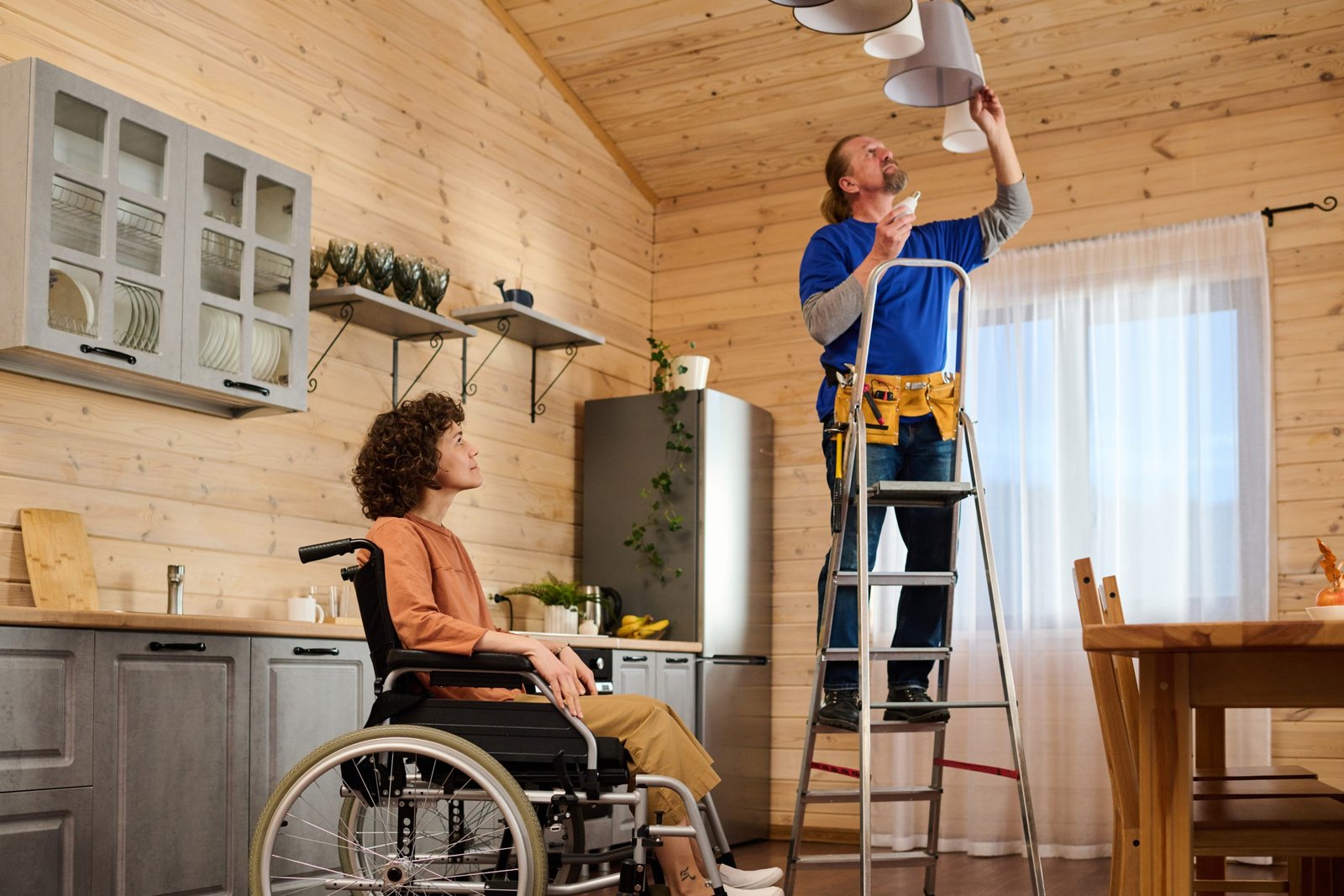
Maintaining a home’s functionality is more complex than they think. There is never an end to the washing, a bathroom that needs a proper scrub, bins that have to be taken out and a lawn that grows the moment you are done mowing it.
For many Australians, over 774,000 Australians with a disability who participate in the National Disability Insurance Scheme (NDIS), the challenges of everyday work can be a real obstacle to living safely and comfortably in their own home.
This is where NDIS Household Tasks support comes in handy. One of the most useful, everyday supports available under the National Disability Insurance Scheme, but one of the most misunderstood. What is its actual scope? Does it extend out to the garden? In what sense is reasonable decided? This guide explains the NDIS Household Tasks support, what it is, who is eligible for it and how you can use it.
More than a mop and bucket: what NDIS Household Tasks covers
In the NDIS Support List, household tasks are defined as the necessary tasks around the home that a person can’t do due to their disability, such as preparing meals, cleaning, doing laundry, and basic yard or home maintenance. This usually entails vacuuming, mopping and cleaning bathrooms, washing and folding laundry, changing bed sheets, washing dishes, and cooking simple meals.
It is part of your Core Supports budget in the Assistance with Daily Life section, along with personal care. They are two separate but related areas of support – personal care (such as showering, dressing and grooming) and NDIS Household Tasks support (which focuses on the home cleaning, hygiene and safety). Many participants are able to move money around between these categories of daily living without the need for a full plan review since Core Supports is flexible.
The Fine Print That Matters: How Support is Approved
All supports funded on the NDIS, from household tasks, have to go through a test called reasonable and necessary. A support has to be about your disability, support the things you want to achieve, be value for money and be likely to be effective and beneficial for you. It also must work in conjunction with existing support from the family, friends and the mainstream service and not duplicate it.
In the case of the activities of daily living, this typically involves evidence that your physical, sensory, cognitive and/or psychosocial disability makes it unsafe or unreasonably difficult to perform the task without assistance.
This is weighed against your goals and the rest of your plan, and then approved by a planner or delegate at the National Disability Insurance Agency (NDIA). It is not trying to get a diagnosis to check off a checklist; it is about showing how the task is related to your regular support needs.
What is outside your budget is the line that gets drawn
It’s just as crucial to find out what is not included as what is included.
Funding for household tasks is for the time of the support worker, not for groceries, cleaning products, appliances or other household expenses, as these are costs that are paid by everyone, regardless of disability.
It will also not support work which could be reasonably expected to be carried out by another member of the family, housemate or a mainstream service, or work which constitutes a whole house renovation, structural repair or extensive landscaping. This support is usually not used to repair a broken appliance or to repair a fence.
If your home requires physical modifications (such as ramps, grab rails or bathroom modifications) that is a different category, Home Modifications, and funded under the Capital Supports instead of Core Supports.
The question that everyone asks about the Lawn
Lawn-Mowing Question
Yard work is one of the most frequent areas where this happens, hence its own mention.
The NDIA does not usually fund the cost of hiring a separate lawn-mowing service as this is not a disability-specific need, as most homes have an ongoing need to manage this need irrespective of disability. What often happens instead is that yard work, mowing, some light weeding, and removing trip hazards from pathways becomes part of a support worker’s normal working day.
If your disability actually prevents you from mowing, weed clearing or debris clearing, and there is no reason why anyone else in your household could do so, then they can do these tasks as part of a support worker’s scheduled time with you. Keeping a safe yard and path is important as well: If it’s overgrown or littered with debris, this is a huge liability to fall on, and it’s a big deal.
Helping Hands or Teaching Moments: How support actually shows up
Support is not necessarily assistance by another person carrying out tasks. Household tasks support can take one of two forms: hands-on or capacity-building, either supporting you to complete the task or helping you to develop skills and confidence to manage it independently. Some participants are involved in both; for example, a labourer could clean parts of the house and lead them through meal preparation.
Support workers can also clean and maintain everyday mobility equipment such as wheelchairs, walkers and grab rails. Hygiene is as important for using these items as it is for the rest of the home.
Getting This Support Up and Running from Plan to Practice
If household tasks support is not in your plan yet, there are a couple of ways to make it a part of your plan. You may raise this at a plan review, request a variation of your plan or contact your Support Coordinator or Local Area Coordinator to discuss what further evidence (such as an occupational therapist’s report) you need to present that demonstrates how your disability impacts your home management.
Participants also often discover that there is existing funding in their flexible Core Supports budget, which can also be utilised for support without a formal change. Once the money has been approved, what you do with your plan will determine your options.
Participants can often use registered or unregistered providers, such as independent support workers or cleaning companies, or they can use one of the providers they have planned for their NDIS plan. NDIA-managed participants must use providers that are registered with the NDIS Quality and Safeguards Commission.
The Small Support that makes a big difference
Simple things around the home can really make a difference in a person’s life, and one might not realise this. Keeping your home clean and tidy minimises the risk of falling, prevents mould and bacterial growth, and allows activities of daily living to occur more easily, instead of being overwhelming. That is a significant consideration for those with chronic pain, limited mobility, or fatigue.
It also extends to the many Australians who look after their family members informally without any payment; having a support worker clean the house or do the washing frees up their time and energy to connect with a family member. It’s not something small at all to be able to make someone feel at ease by inviting them to your home without having to worry about anything, or having a home that feels under control just by being there.
Prepare for your planning meeting by walking into it!
Planning meetings are made easy with preparation. For a week or two, maintain a simple log of how long it takes you to do certain tasks around the house, which tasks you have difficulty with, and what happens if you do not complete them, such as pain, exhaustion or safety concerns. An occupational therapist, GP or allied health professional report is taken as a guide, as they are able to relate the task to your disability.
Describe the support you need, rather than stating it in general terms: You need to have the vacuum cleaned, the bathroom cleaned and the laundry done twice a week; standing for long periods causes pain.It can help put this into the NDIS’s language and, most of the time, make the difference between a quick approval and a drawn-out back-and-forth.
Integrating everything all together
The reason for NDIS Household Tasks support is that we all want to live in a clean, safe and comfortable home; it doesn’t matter what your disability makes difficult. The knowledge of what is included in the Scheme and what is not, as well as knowing how to make your case, makes a confusing part of the Scheme a useful one.
If you are not confident about what your next steps should be, a discussion with your Support Coordinator, Local Area Coordinator or trusted provider is a great next step. Having this support correctly does not simply clean up your home; it can also present you with time, energy and a little bit of peace of mind.
FAQ’s
1. What is NDIS Household Tasks?
The NDIS Household Task Support is a type of home-based support that is funded in a person’s Core Supports budget, where without this support the person would be unable to safely complete a task. This generally involves care and support such as cleaning, laundry, preparing meals and minor house/yard maintenance, provided by a support worker under an approved NDIS plan.
2. Does the NDIS pay for house cleaning?
Absolutely, house cleaning is one of the most frequently funded items for the household under the NDIS when it is reasonable and necessary. It is funded under the Assistance with Daily Life support category, and the national price limit for this support in 2026-27 is $60.10 per hour, which is higher in remote and very remote areas.
3. Is the mowing of the lawn or gardening covered by the NDIS?
Typically not as a single type of gardening contractor alone; gardening in general does not fall under the category of disabilities. Many participants are unable to mow, weed or clean pathways due to their disability, and this can be carried out for them as part of their regular household support shift by the support worker to ensure safety at home.
4. Who might be able to access NDIS Household Tasks?
The eligibility criteria to access the support are whether it is reasonable and necessary for the participant as outlined in the NDIS guidelines, and it can’t be reasonably provided through the family, housemates or the mainstream services system. No diagnosis is a prerequisite.
5. Where does money go towards my home support in my NDIS plan?
Household Tasks are in the Core Supports budget category for Assistance with Daily Life, under the NDIS registration group 0120. Funding may change from one related daily living support to another related daily living support, with flexibility because of the nature of Core Supports; that is, without a full plan reassessment.
6. May I have some say in the tasks my family does?
Yes. Participants who are self-managed or plan-managed can usually select any appropriate provider (registered or unregistered), such as an independent support worker or cleaning service. Participants managed by the NDIA must go through the NDIS Quality and Safeguards Commission for a list of providers.
7. How do I get household tasks support in my NDIS Plan?
It can be requested at a plan review or as a plan variation, and may be requested through your Support Coordinator or Local Area Coordinator and supported by evidence like an occupational therapist’s report. For a few participants, there is the option to begin utilising existing Core Supports funding without a formal plan change.